Amber
Fossilized resin with insects or plants
Ammonites
Extinct cephalopod mollusks
Crustaceans
Crabs, shrimps, and other fossil arthropods
Amphibians and Reptiles
Pieces of sauropsids, crocodiles, and turtles
Teeth
Shark teeth and other fish
Dinosaurs
Very well preserved fossil pieces
Echinoderms
Sea urchins, starfish and other fossils
Insects
Very well preserved and well defined fossil insects
Mammals
Fossils of mammuthus, whales, bears, bison ...
Other Fossils
Rare, scarce and diverse classification fossils
Fish
Fossils of fish, vertebrae, fins and teeth
Paleobotany
Fossilized leaves, trunks, conifers, ferns and pineapples
Trilobites
Large collection of fascinating fossil trilobites
Special
Unique and special collectible fossils
Amber
Fossilized resin with insects or plants
Ammonites
Extinct cephalopod mollusks
Crustaceans
Crabs, shrimps, and other fossil arthropods
Amphibians and Reptiles
Pieces of sauropsids, crocodiles, and turtles
Teeth
Shark teeth and other fish
Dinosaurs
Very well preserved fossil pieces
Echinoderms
Sea urchins, starfish and other fossils
Insects
Very well preserved and well defined fossil insects
Mammals
Fossils of mammuthus, whales, bears, bison ...
Other Fossils
Rare, scarce and diverse classification fossils
Fish
Fossils of fish, vertebrae, fins and teeth
Paleobotany
Fossilized leaves, trunks, conifers, ferns and pineapples
Trilobites
Large collection of fascinating fossil trilobites
Special
Unique and special collectible fossils
Credit card or PayPal
Estimated time 7 to 10 days
See our return policy
Guarantee safe & secure checkout
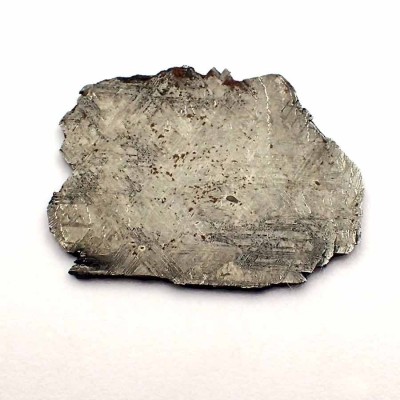
NWA 14126 (Rumuruti Chondrite R3)
Slice of 7.60 grams and 4.5 x 3 cm.
Northwest Africa, 2021
It is delivered with box and description, and certificate.
They differ from ordinary chondrites primarily in that they have most of the metal in the form of sulfides, are more oxidized, and contain little metallic iron and nickel. They have a more dusty matrix (about 50%), a higher concentration of trace elements zinc and selenium, and a higher proportion of oxygen-17 than ordinary chondrites. The implanted solar wind is found in more than half of the R chondrites analyzed for noble gases to date.
Apparently, the R chondrites come from the regolith of an asteroid (surface with loose solid materials). They are named "R" after the Rumuruti meteorite, which fell on January 28, 1934 in the Rift Valley, Kenya.