Amber
Fossilized resin with insects or plants
Ammonites
Extinct cephalopod mollusks
Crustaceans
Crabs, shrimps, and other fossil arthropods
Amphibians and Reptiles
Pieces of sauropsids, crocodiles, and turtles
Teeth
Shark teeth and other fish
Dinosaurs
Very well preserved fossil pieces
Echinoderms
Sea urchins, starfish and other fossils
Insects
Very well preserved and well defined fossil insects
Mammals
Fossils of mammuthus, whales, bears, bison ...
Other Fossils
Rare, scarce and diverse classification fossils
Fish
Fossils of fish, vertebrae, fins and teeth
Paleobotany
Fossilized leaves, trunks, conifers, ferns and pineapples
Trilobites
Large collection of fascinating fossil trilobites
Special
Unique and special collectible fossils
Amber
Fossilized resin with insects or plants
Ammonites
Extinct cephalopod mollusks
Crustaceans
Crabs, shrimps, and other fossil arthropods
Amphibians and Reptiles
Pieces of sauropsids, crocodiles, and turtles
Teeth
Shark teeth and other fish
Dinosaurs
Very well preserved fossil pieces
Echinoderms
Sea urchins, starfish and other fossils
Insects
Very well preserved and well defined fossil insects
Mammals
Fossils of mammuthus, whales, bears, bison ...
Other Fossils
Rare, scarce and diverse classification fossils
Fish
Fossils of fish, vertebrae, fins and teeth
Paleobotany
Fossilized leaves, trunks, conifers, ferns and pineapples
Trilobites
Large collection of fascinating fossil trilobites
Special
Unique and special collectible fossils
Credit card or PayPal
Estimated time 7 to 10 days
See our return policy
Guarantee safe & secure checkout
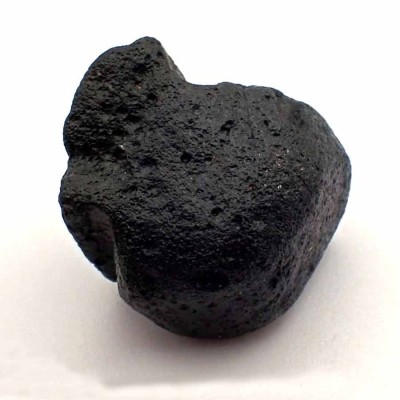
Full Tektita, shaped round bar with primary flight marks, measured 4.9 cm long and ± ± 2.7 cms thick, weighs 30.12 grams. Are not very common so large pieces.
*Tektites are glassy objects formed from the melting of terrestrial rocks by hypervelocity impacts of large extraterrestrial objects. Superficially, they resemble obsidian in appearance and chemical composition; however, they are distinguished by their very low water and alkali content and the presence of lechatelierite (pure silica glass). Some Muong Nong-type tektites contain coesite (a high-density silica polymorph), some Australasian tektites contain Ni-Fe spherules, and, rarely, they contain baddeleyite (a zircon oxide mineral produced at very high temperatures during shock metamorphism), which could indicate a meteorite impact origin.
0.7 million years.
Southeast Asia, Thailand