Amber
Fossilized resin with insects or plants
Ammonites
Extinct cephalopod mollusks
Crustaceans
Crabs, shrimps, and other fossil arthropods
Amphibians and Reptiles
Pieces of sauropsids, crocodiles, and turtles
Teeth
Shark teeth and other fish
Dinosaurs
Very well preserved fossil pieces
Echinoderms
Sea urchins, starfish and other fossils
Insects
Very well preserved and well defined fossil insects
Mammals
Fossils of mammuthus, whales, bears, bison ...
Other Fossils
Rare, scarce and diverse classification fossils
Fish
Fossils of fish, vertebrae, fins and teeth
Paleobotany
Fossilized leaves, trunks, conifers, ferns and pineapples
Trilobites
Large collection of fascinating fossil trilobites
Special
Unique and special collectible fossils
Credit card or PayPal
Estimated time 7 to 10 days
See our return policy
Guarantee safe & secure checkout
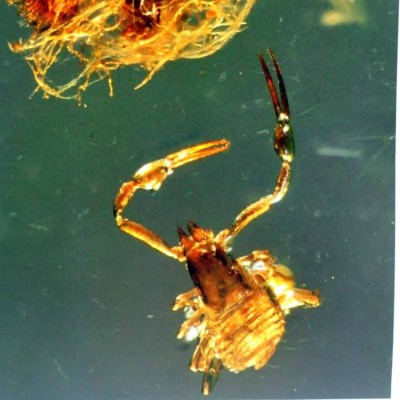
Insect in amber measuring ± 4.8 grams and ± 2.7 x 2 cm.
This amber is unique since it is fluorescent and gives a green color, it can be seen with black light.
Chiapas amber has special characteristics, In its natural state it appears in the form of yellow, reddish or golden nodules, within strata of marine calcareous sandstones and lignite layers in geological formations corresponding to the final part of the Oligocene and early Miocene, with an age of 22.5 to 26 millions of years. It has been determined that its paleobotanical origin was the resin of a legume of the genus Hyme-naea, ancestor of the tree known locally as guapiñol.
Tertiary epoch, 25 million years,
Simojovel, Chiapas, Mexico